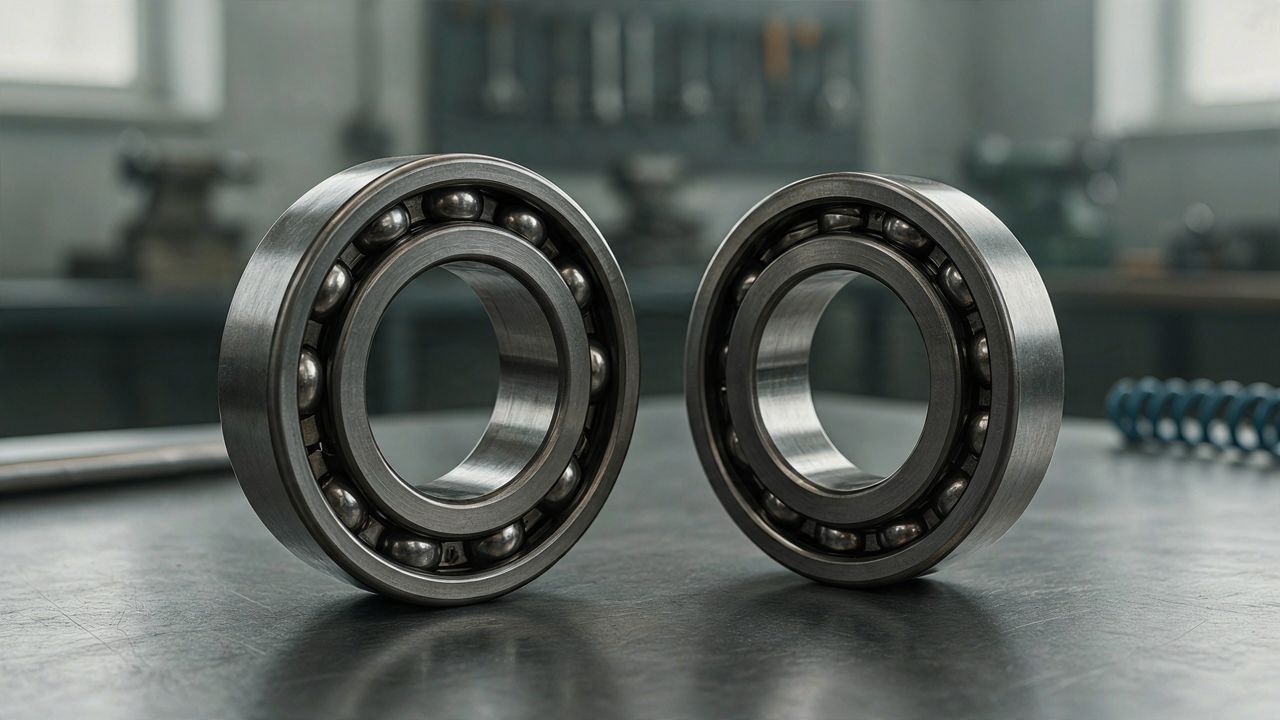
Choosing an industrial bearing isn’t just about finding one that fits. Differences in internal clearance, seals, lubrication, and manufacturing quality can affect machine performance, maintenance costs, and equipment downtime.
When comparing Original Industrial Bearings with aftermarket alternatives, it’s worth understanding what separates them and how to decide which option makes sense for your application.
Understanding Original and Aftermarket Bearings
Original bearings are supplied under an equipment manufacturer’s brand or through its approved distribution network. In some cases, the actual bearing is manufactured by a specialist company and sold under the equipment brand. Buyers looking for Original Industrial Bearings often choose this route when maintaining equipment according to the manufacturer’s specifications is a priority.
Aftermarket bearings are replacement products sold outside the original supply channel. They can come from established bearing manufacturers or other suppliers, with varying levels of quality and technical documentation.
Neither category automatically guarantees better performance. What matters is the manufacturer’s reputation, product specifications, and whether the bearing meets your machine’s requirements.
It’s also important to distinguish genuine products from compatible replacements and counterfeits. A third-party bearing may be perfectly suitable, but a product falsely advertised as a genuine branded item raises serious concerns.
Compare Specifications Before Buying
Two bearings with identical dimensions aren’t necessarily interchangeable. Internal clearance, tolerance class, cage design, seals, lubrication, and preload requirements can all influence performance.
Start by checking the equipment manual and the markings on the existing bearing. Compare these details with the proposed replacement and consult a bearing specialist if anything differs.
Operating conditions matter, too. Consider load capacity, rotational speed, temperature, vibration, contamination, and lubrication requirements. A bearing used in a dusty industrial environment may need different protection than one installed in a clean production facility.
Ask suppliers for technical specifications, manufacturer details, and batch identification. Standards such as ISO 492 provide dimensional and geometrical tolerance requirements for rolling bearings.
Look Beyond the Purchase Price
A cheaper bearing isn’t necessarily the more economical option. Installation labor, maintenance frequency, unexpected failures, and production downtime can quickly outweigh the initial savings.
Compare equivalent products and request written quotations that clearly identify the manufacturer and exact bearing designation.
Availability is another consideration. A reliable supplier with consistent stock and technical support can make a significant difference, particularly when dealing with critical machinery.
Buy From Reliable Suppliers
Before ordering, verify the supplier’s relationship with the manufacturer and check the product’s identification and documentation. Review warranty conditions and confirm who handles technical support or potential claims.
Proper installation is equally important. Follow the manufacturer’s mounting instructions, maintain cleanliness, check alignment, and use the recommended lubricant. Even a high-quality bearing can fail prematurely when installed incorrectly.
Making the Right Decision
Original Industrial Bearings may be preferable when equipment specifications, warranty conditions, or specialized operating requirements demand them.
Aftermarket alternatives can be a practical choice when their specifications are fully verified and the supplier is trustworthy.
Ultimately, don’t choose based on branding or price alone. Focus on compatibility, documented quality, operating conditions, and long-term costs. A carefully selected bearing helps protect your equipment and keeps unnecessary maintenance interruptions to a minimum.

 using WordPress and
No responses yet